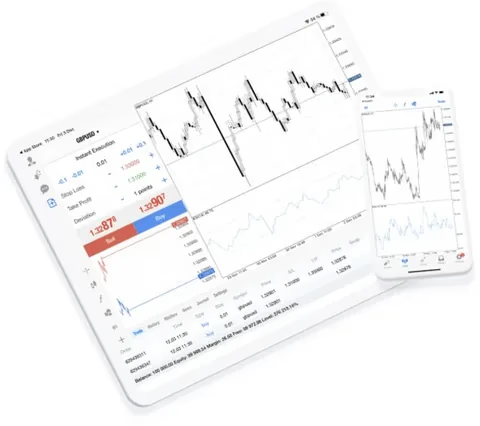
MT4 in 2026: why it refuses to die
MetaQuotes stopped issuing new MT4 licences a while back, steering brokers toward MT5. Still, most retail forex traders kept using MT4. The reason is simple: MT4 works, and people trust what works. Thousands of custom indicators, Expert Advisors, and community scripts only work with MT4. Migrating to MT5 means porting that entire library, and few people don't see the point.
I spent time testing both platforms side by side, and the differences are marginal for most strategies. MT5 has a few extras including more timeframes and a built-in economic calendar, but chart functionality feels nearly identical. If you're weighing up the two, MT4 is more than enough.
Getting MT4 configured properly the first time
Installation takes a few minutes. Where people waste time is getting everything configured correctly. On first launch, MT4 loads with four charts tiled across a single workspace. Close all of them and start fresh with the markets you actually trade.
Save yourself repeating the same setup by using templates. Build your usual indicators once, then save it as a template. From there you can load it onto other charts instantly. Minor detail, but over time it makes a difference.
A quick tweak that helps: open Tools > Options > Charts and check "Show ask line." By default MT4 displays the bid price by default, which makes buy entries seem misaligned by the spread amount.
Backtesting on MT4: what the results actually mean
The strategy tester in MT4 gives you the ability to run Expert Advisors against historical data. That said: the quality of those results hinges on your tick data. Standard history data is not real tick data, meaning gaps between real data points are estimated using algorithms. If you're testing something that needs accuracy, download real tick data from a provider like Dukascopy.
The "modelling quality" percentage is more important than the bottom-line PnL. Anything below 90% suggests the results aren't trustworthy. I've seen people share screenshots with 25% modelling quality and can't figure out why their live results don't match.
The strategy tester is one of MT4's stronger features, but the output is only useful with quality tick data.
Building your own MT4 indicators
MT4 ships with 30 default technical indicators. Few people use more than five or six. That said, the platform's actual strength comes from community-made indicators written in MQL4. There are a massive library, covering everything from basic modifications to full trading dashboards.
The install process is painless: copy the .ex4 or .mq4 file into your MQL4/Indicators folder, restart MT4, and the indicator shows up in the Navigator panel. The risk is quality. Community indicators range from excellent to broken. A few are well coded and maintained. Others haven't been updated since 2015 and may crash your terminal.
Before installing anything, verify how recently it was maintained and if people in the forums mention bugs. Bad code doesn't only show wrong data — it can freeze your entire platform.
The MT4 risk controls you're probably not using
MT4 has a few native risk management tools that a lot of people don't bother with. The most useful is maximum deviation in the trade execution window. This defines the amount of slippage is acceptable on market orders. Leave it at zero and the broker can fill you at whatever price the broker gives you.
Stop losses are obvious, but MT4's trailing stop feature is overlooked. Click on an open trade, pick Trailing Stop, and enter a distance. It moves when the trade goes your way. Not perfect for every strategy, but if you're riding trends it reduces the urge to micromanage the trade.
You can configure all of this in under five minutes and they take some of the guesswork out of trade management.
Running Expert Advisors: practical expectations
Expert Advisors on MT4 have obvious appeal: program your strategy and stop staring at charts. In practice, most EAs lose money over any decent time period. The ones advertised with perfect backtest curves tend to be fitted to past data — they performed well on the specific data they were tested on and fall apart the moment the market does something different.
That doesn't mean all EAs are a waste of time. Certain traders build custom EAs to handle well-defined entry rules: time-based entries, automating position size calculations, or closing trades at set levels. That kind of automation tend to work because they execute defined operations that don't require judgment.
If you're evaluating EAs, run them on a demo account for at least several weeks in different conditions. Live demo testing reveals more than backtesting alone.
MT4 on Mac and mobile: what actually works
MT4 was built for Windows. Running it on Mac deal with a workaround. The old method was emulation, which did the job but came here with rendering issues and the odd crash. Some brokers now offer Mac-specific builds built on compatibility layers, which is an improvement but remain wrappers at the end of the day.
On mobile, available for both iOS and Android, are genuinely useful for monitoring positions and tweaking stops. Doing proper analysis on a mobile device doesn't really work, but adjusting a stop loss on the go has saved plenty of traders.
Check whether your broker offers a native Mac build or just a wrapper — the experience varies a lot between the two.